Window security: what RC2 means and why it matters
The European standard that classifies burglary resistance, explained without jargon, with the real numbers behind the classification.
Short answer
RC2 is the burglary-resistance class of European standard EN 1627: frame, hardware and glass must hold out for at least 3 minutes against a tester with a screwdriver, crowbar and wedge. In RC2N the glass is left out of the test. RC2 is the more complete class and the reference recommendation for homes.
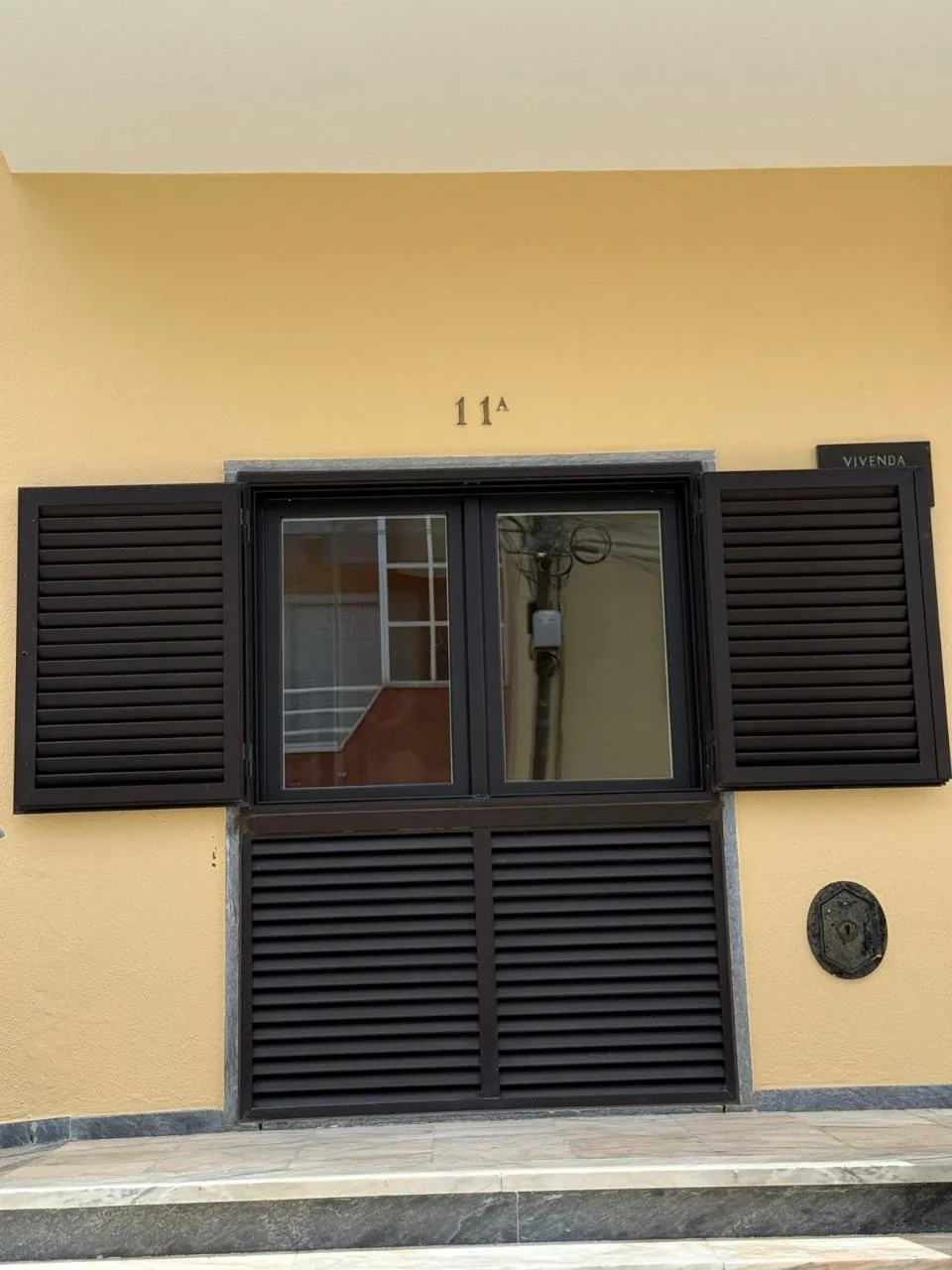
Why the lock matters as much as the glass
It’s easy to think only about thermal or acoustic insulation when choosing a new window, and forget that the same window is also the most obvious entry point for a break-in. As we already noted in the guide on signs you need new windows, a lock that’s easy to force is, on its own, a sign of end of service life, even if the glass and insulation are still fine.
Old single-point locking hardware: found on most windows over fifteen or twenty years old, offers little real resistance to a break-in attempt with a simple tool. Current windows with multi-point locking and, optionally, a formal burglary-resistance rating (the "RC" classes under EN 1627) require considerably more tools and time to force. That difference, measurable and lab-tested, is what this guide explains.
The EN 1627 standard and how it’s tested
EN 1627 is the European standard that defines the requirements and burglary-resistance classes for doors, windows, curtain walling, grilles and shutters. It’s a classification standard. It states what each class requires, but it isn’t the one running the test. That falls to three complementary test-method standards:
A window rated RC2, for example, has been subjected to all three forms of attack, static, dynamic and manual with tools, and met the EN 1627 criteria on all three.
The RC classes, and which to choose
The standard defines seven classes, from RC1N (the most basic) to RC6 (the highest, typically for commercial use or high-risk locations). For a home, the relevant classes are the lower ones:
- RC2N: entry-level class. The glass isn’t part of the tested attack, so standard glass can be used; all the resistance sits in the frame and hardware.
- RC2: the reference class for homes. Besides reinforced hardware. It requires laminated security glass (class P4A, EN 356) as part of the tested system.
- RC3 and above: aimed at commercial premises or high-risk locations; for an ordinary home. This is generally more than needed.
Times tested under EN 1630 (manual burglary attempt with tools). Hardware without an RC rating has no minimum guaranteed or tested time, that guarantee is exactly what the certification adds. According to European police crime-prevention guidance, RC2 and above already delivers good protection in new builds and renovations.
Not sure what class your home has today?
We assess your current hardware and tell you, with no sales pressure, whether it’s worth reinforcing.
Toughened or laminated: the other side of safety
So far we have talked about the person trying to get in. But “safety glass” has a second meaning, which shows up at other moments in a home's life: what happens to people when glass breaks — a ball, a fall against the patio door, a knock while moving furniture. Two different glasses exist for that, and they get confused constantly because both carry the same label.
The rule of thumb we use at surveys: where the risk is a person against the glass, laminated is the right choice — floor-to-ceiling patio doors, glazing next to stairs, low windows in homes with children, glazed balcony guards. It rejects falling fragments and keeps the opening closed until the unit is replaced. Toughened glass shines elsewhere — shower screens, table tops, furniture — where what matters most is that the pieces do not cut.
In a double-glazed unit the two can be combined to match the risk: an ordinary outer pane with a laminated inner pane in a child's bedroom, for example, or laminated on both sides in a ground-floor patio door — which then adds burglar resistance to people protection.
RC2 in Portugal: a real option, not just European theory
RC2 isn’t a label that only exists in German catalogues. It’s already an advertised, available specification in the Portuguese window industry. REHAU Portugal has a dedicated page on burglar-resistant windows explaining the RC classes. Salamander, through its proEvolution system sold in Portugal, explicitly advertises the ability to reach the RC2 burglary-resistance class. Other profile systems follow the same path.
In practice. This means asking for RC2 isn’t an exotic request: it’s a specification that any serious profile manufacturer in Portugal already knows and can deliver, in both PVC and aluminium. If you’re renovating or fitting new windows, you can simply ask for the quote to include RC2-rated hardware as part of the specification. We handle that with the chosen profile manufacturer.
Insurance and real risk: what’s actually true
On insurance: DECO PROteste confirms that having security systems at home, an armoured door, an alarm, permanent surveillance, can be taken into account by insurers when calculating the premium. We did not, however, find any Portuguese insurer specifically citing the EN 1627/RC2 rating as a discount criterion; it’s worth confirming directly with your insurer, without assuming a percentage upfront.
On risk: according to the 2024 Annual Internal Security Report (RASI), residential burglaries involving forced entry, climbing or false keys fell 11.2% in 2023 versus the previous year, a positive trend, and not a reason for alarm. Even so, theft remains the most reported crime category nationally. Stronger hardware doesn’t eliminate the risk, but it clearly raises the time and effort a break-in requires, and an opportunistic burglar rarely persists beyond a minute or two.
Sources
- ÖNORM EN 1627:2021 (ANSI Webstore): Burglar resistance requirements and classification
- EN-Standard.eu: EN 1628:2021, static loading test method
- bew24-fenster.de: Tested resistance times for RC2 and RC2N
- Polizei-Beratung (German police crime-prevention body), Technical burglary security
- REHAU Portugal: Burglar-resistant windows
- Caixilhopvc.pt: Salamander proEvolution, RC2 resistance class
- EN 12150 — thermally toughened safety glass (fragmentation)
- EN 14449 — laminated glass and laminated safety glass (conformity)
- DECO PROteste: Home Multirisk Insurance: how to choose
- Sistema de Segurança Interna: Annual Internal Security Report (RASI) 2024
Frequently asked questions about window security
It is a burglary-resistance class defined by the European standard EN 1627, tested under EN 1630: an expert tries to force the window open using common tools (screwdriver, crowbar, wedge) for a timed attack. To earn RC2, the system, frame, hardware and, in this class, the glass too, has to withstand that attack for at least 3 minutes, within a test lasting 15 minutes in total.
The tested resistance time is the same (3 minutes), but what gets tested changes: under RC2N, the glass isn’t part of the tested attack, so standard glass can be used and all the resistance sits in the frame and hardware. Under RC2, the test includes the glass, which then has to be laminated security glass (class P4A under EN 356). RC2 is the more complete class and the reference recommendation for homes; RC2N is a valid alternative where a direct attack on the glass is a lower risk.
Not exactly. The RC2 rating applies to the whole tested system as a unit, frame, hardware and, where relevant, the glass, not to a single part on its own. Swapping just the lock for a sturdier one always improves real-world security, but it doesn’t grant formal RC2 certification to a window that was never designed and tested as that assembly. To actually hold the rating, you need a new window specified and supplied as a certified RC2 system.
According to European police crime-prevention guidance, RC2 and above already provides good protection against typical break-in attempts in new builds and renovations. RC3 and higher are aimed mainly at commercial premises or high-risk locations, for an ordinary home, RC2 tends to be the right balance between security and cost.
It varies by manufacturer and profile system, and also depends on whether you’re already fitting basic multi-point hardware (common on most current windows) or stepping up from something more basic. We don’t quote a generic percentage. We get the exact figure with and without RC2 in your quote, so you decide with real numbers in hand.
DECO PROteste confirms that having security systems at home, an armoured door, an alarm, permanent surveillance, can be factored in by insurers when calculating the annual premium. We could not, however, find any Portuguese insurer specifically citing the EN 1627/RC2 rating as a discount criterion; what exists is a more generic reference to "protection measures". It’s worth asking your insurer directly whether certified RC2 hardware counts for that purpose. It isn’t something we can guarantee upfront.
It is a falling risk, but not a negligible one: the 2024 RASI records an 11.2% drop in residential burglaries involving forced entry, climbing or false keys in 2023, and it still sits inside the country's most reported crime category. No window removes the risk; what the RC class measures is the time and effort a break-in comes to require.
Yes. The RC2 rating is already offered by profile-system manufacturers in both materials on the Portuguese market, for example, REHAU (PVC) has a dedicated page on burglar-resistant windows, and Salamander (also PVC) explicitly advertises the ability to reach RC2 in its proEvolution system. The principle, reinforced multi-point hardware and, in some cases, security glass, is the same in both materials.
It matters most wherever there’s a more vulnerable access point: ground floor, an accessible balcony, windows facing a shared yard, or an outbuilding roof. In a high-floor flat without that kind of access, the relative gain is smaller, but the decision always depends on the actual risk at the property, not a fixed rule by property type.
It depends on which risk you want to stop. Toughened glass (EN 12150) protects against cuts: it breaks into small, blunt fragments, but the whole pane goes at once. Laminated glass (EN 14449) stays in place after breaking, held by the PVB interlayer — which makes it the right choice wherever a person could fall against the glass (patio doors, low glazing, next to stairs), and it is also the glass required for RC2 and used in acoustic units. In double glazing the two can be combined pane by pane, according to which side the risk is on.
Ask for the RC2 rating to be stated explicitly in the proposal, tied to the hardware system and, where relevant, the specified glass, not just a generic mention of "reinforced security". A serious quote references the tested class, the same way it references the Uw value or the acoustic class elsewhere in the proposal.
Want stronger security without changing your home’s style?
We quote RC2-rated hardware directly in the proposal, with no hidden fees.