Signs you need new windows
Five concrete signs, four home tests to confirm them, and what each one means, so you know if the problem is the window, and not something else.
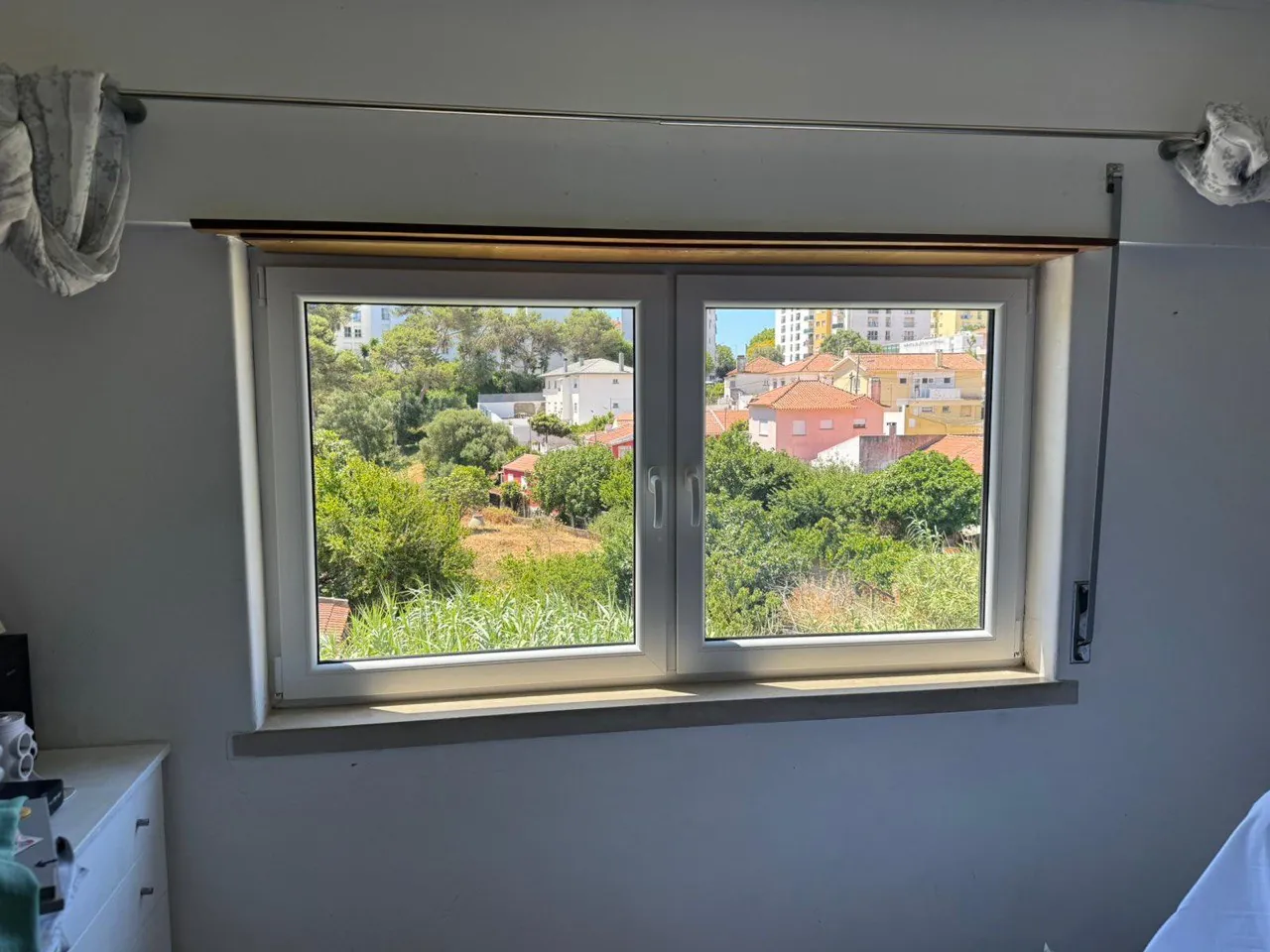
The 5 most common signs
The house won't heat up, no matter how long the heating runs
Heat escapes through the glass and through the gaps in the frame. Windows and glazed doors are responsible for a significant share of the heat loss in a poorly insulated home, with single glazing, far more than with a modern Low-E double glazing. If a room stays cold even with the heating on all day, the problem is almost always the window, not the heating system.
Water running down the glass and mould on the frame
Condensation appears when a cold surface (the glass, or an aluminium frame without thermal break) meets the humid air inside the home. It is simple dew-point physics, not a fault in the glass. Double glazing with a good seal keeps the inner surface warmer, and mould loses the surface it needs to take hold.
You can hear traffic, neighbours or the street as if the window were not there
An old window, with single glazing or a gap in the seal, lets through almost all the outside noise. The difference between single glazing and a well-specified asymmetric acoustic glass can be around 15-16 dB, and since every 10 dB reduction cuts perceived noise roughly in half, the difference felt at home is significant. See the acoustic glass guide for the full figures.
You feel a draught, even with the window closed
Dried-out rubber seals or a warped frame stop doing their job. If you feel air coming in around the edges with the window closed, the seal is no longer doing its job, and that also lets in humidity and noise.
The window creaks, sticks, or no longer closes properly first time
Old hardware, or a wood/aluminium frame that has warped over time, throws the sash out of alignment. If it takes force to close, or the lock no longer catches properly, that is a clear mechanical sign of a frame at the end of its useful life. If, on the other hand, the lock closes just fine but is easy to force with a simple tool, that is a different sign, see our guide on window security and the RC2 rating.
Four home tests to confirm the problem
Before deciding. It is worth confirming the problem with simple tests, no special tools required:
Hold a lit candle or a stick of incense (never use a lighter near curtains) about 2-3 cm from the closed frame, moving it around the whole perimeter. If the flame or smoke flickers or leans clearly at one point, there is air leaking in there. It is the most direct home test for detecting a degraded seal.
Close a sheet of A4 paper in the window, between the moving sash and the fixed frame, and pull. If it slides out easily, the seal pressure is insufficient at that point, repeat around the whole perimeter to map where the rubber no longer compresses.
Touch the glass from the inside. If the "mist" is on the surface of the glass (on the inside) and disappears when wiped, it is normal condensation from indoor humidity. It is fixed by ventilating more or replacing the glass. If the mist is <strong>between the two panes</strong> of the double glazing and does not clear when wiped, the glass unit has lost its seal (a failed sealant) and needs to be replaced. It cannot be repaired — our condensation-between-panes guide covers that case.
Close the window and ask someone to speak in a normal voice 1 metre away, on the outside. If you can clearly hear the words through the closed glass, the sound insulation is well below what you would expect from a window in good condition.
Did the tests and confirmed the problem?
A free technical visit confirms whether it is a one-off or worth replacing everything at once.
How long each material lasts
If your home has decades-old original window frames, it is normal for them to already be at (or close to) the end of the expected working life for that material:
until it warps or rots
weak thermal insulation from day one
insulation holds up over its working life
with annual lubrication of the hardware
An "old-style" aluminium frame, without a thermal break, can last decades structurally, but it will never insulate well, the continuous metal bar conducts cold and heat directly; it is a limitation by design, not a fault. See the full comparison in the PVC vs aluminium guide.
Just the glass, or the whole frame?
It is the most common question after recognising the signs, and the right answer is not always "replace everything". It depends on the condition of the frame, not just the glass:
Frame straight, not warped, hardware closes properly
→ Replacing just the glass can be worth it
Frame warped, misaligned, or no longer closes first time
→ Replace the whole frame: new glass would inherit the same problem
Aluminium without thermal break, even if structurally sound
→ Replace the frame: the metal bar is the limitation, not the glass
Visible gap in the seal, but frame still solid
→ Replacing the rubber seals can delay the decision by 1-2 years
Rule of thumb: the glass is the cheapest component to replace on its own; the frame (profile + hardware + seal) is what determines whether it is worth it. A solid frame with weak glass is a legitimate partial repair; a warped frame with new glass is money poorly spent.
Humidity, mould and health: what the guidelines say
It is not just discomfort. World Health Organization guidelines on indoor air quality link prolonged exposure to damp, mouldy environments with more respiratory symptoms, worsened asthma, and a higher risk of respiratory infections, especially in children and older adults, the most sensitive groups. As a general rule of thumb for comfort and prevention, an indoor relative humidity between 40% and 60% is usually recommended; above that, the risk of condensation and mould rises consistently.
A window that no longer seals well contributes directly to this problem: it lets in cold, lowering the inside surface temperature and favouring condensation, and, paradoxically, it can also let in humidity from outside through direct air leaks. Treating mould with bleach without treating the cause deals with the symptom, not the problem, and the cause is not always the window: the next section helps you work out which one is yours.
Mould keeps coming back in the same spot?
Calculate the estimate for your home, or request a technical visit with no sales pressure.
Will new windows fix the damp? It depends where it shows up
Worth being clear before you spend money: the window causes some damp problems, is half the cause of others, and has nothing to do with the rest. Where the water or the mould appears tells you most of what you need, and telling these four cases apart is the difference between solving the problem and moving it somewhere else.
Water forms on the glass and the frame, mostly in the morning
This is the most common case and the one most directly tied to the window. Indoor air meets the coldest surface in the room, and in an old opening that surface is the single glazing or the aluminium frame without a thermal break, which carries the outdoor cold straight through. Double Low-E glazing in an insulating frame keeps the inner face considerably warmer: the air no longer reaches dew point on that surface, and the water stops forming.
The whole home sweats: glass, tiles, laundry that will not dry
Here the window is half the story. The other half is the vapour your home produces every day, cooking, showering, drying laundry indoors, which has to get out. Old windows did that ventilating for you, through their gaps. A new window seals properly and that escape route disappears: with no replacement ventilation, the moisture that used to leave now stays. The answer is not to seal less, it is to ventilate in a controlled way, with self-regulating trickle vents in the frame or the shutter box (building ventilation is regulated matter, under Portaria 353-A/2013). We say so at the measurement: it is the difference between solving the problem and moving it somewhere else.
The mould is on the walls, in corners or behind furniture
When the patches appear away from the opening, in corners, behind a wardrobe pushed against an exterior wall or up near the ceiling, the coldest surface in the room is no longer the window: it is the wall, often at a thermal bridge where the structure interrupts the insulation. Replacing the window improves comfort but does not treat that wall. There is an effect here worth knowing in advance: by making the opening considerably warmer than the surrounding envelope, condensation can start showing on the wall, which is now the coldest point. That is not a fault in the new window, it is the difference in insulation between opening and wall becoming visible. In these cases the route is insulation and ventilation, and we say so even when it means you will not be buying from us.
Damp rises from the skirting board, or runs down after rain
Two situations that get mistaken for condensation and are not fixed by windows. Patches rising from the base of the wall, with crumbling plaster and white salts on the surface, point to rising damp drawn up from the ground. Patches that appear after rain, on the ceiling or running down the wall, point to water ingress, roof, façade or a poorly sealed shutter box. There is a third case that does belong to the opening: if the misting is between the two panes and will not wipe away, the sealed unit has lost its seal, and the glass unit is replaced without touching the frame — the condensation-between-panes guide explains the process.
A practical rule for winter: if the water is on the glass and the frame, look at the window; if it is spread across the home, look at ventilation; if it is on the wall, the skirting or the ceiling, look at insulation and water ingress before asking anyone for window quotes.
Recognised two or more signs?
That is a good indicator that the window frames, not just the glass, have already reached the end of their useful life. A price estimate or a free technical visit clarifies whether the problem is a one-off or worth replacing everything at once.
Calculate my estimate →Frequently asked questions
Not necessarily. If the problem is localised, it may just be that window (orientation, exposure, or a worse seal). A technical visit identifies whether it is a single case or a pattern across the whole home.
This is a well-known effect, and it has an explanation: old windows, without meaning to, let humid air escape through the gaps. New windows seal much better, and that escape route disappears, the humidity that used to leave now stays. The answer is not to "loosen" the seal. It is to ventilate in a controlled way: self-regulating vents (provided for in the building ventilation regulation, Portaria 353-A/2013, a Portuguese government ordinance) keep air exchange going without losing the insulation you gained.
It depends on the condition of the frame. If the profile is straight, not warped, and the hardware works, sometimes just the glass is worth it. If the frame no longer closes properly or is deformed, replacing just the glass will not fix it, the mechanical problem comes back, and the seal will never be quite right on a crooked frame.
World Health Organization guidelines on indoor air quality link prolonged exposure to damp and mould with more respiratory symptoms, worsened asthma, and a higher risk of respiratory infections, especially in children and older adults. This is not alarmism. It is reason enough to treat persistent mould as a problem to fix, not just clean up.
As a general rule of thumb for comfort and mould prevention, an indoor relative humidity between 40% and 60% is usually recommended. Above that range, the risk of condensation and mould rises; below it, the air becomes too dry for comfort. A simple hygrometer (a few euros) lets you track this at home.
In some cases, yes: replacing dried-out rubber seals is a cheap repair that can delay the decision by 1-2 years, if the rest of the frame is in good condition. It will not fix cold from single glazing or a warped frame, but it does deal well with a localised draught.
Yes. It is very common. North-facing façades, or ones more exposed to the prevailing wind, tend to show the signs first, more cold, more condensation. That does not mean the other windows are fine, only that they have not reached the same point yet; it is the same material, the same age.
The signs above are usually clear within a single winter. If you recognise two or more of these points in your home, or confirm air leaks with the home tests, it is worth asking for an estimate. It is free and with no sales pressure.
Yes, and it is a sign in its own right, separate from thermal or acoustic ones. Old single-point hardware offers little resistance to a break-in attempt. Current windows with multi-point locking and an RC2 security rating (the most common for residential use) require considerably more tools and time to force. It is worth checking the security rating of the system, not just the insulation.
Put an end to cold and condensation this year
Calculate your estimate or request a free quote. Response within 1 business day, no small print.