Replacing windows when renovating in Portugal
You bought the house for the light, the olive tree, the price per square metre. Then you spent a winter in it. This guide covers what foreign owners keep discovering the hard way: why Portuguese homes are cold, what the law says about changing windows, and how to run the job without speaking Portuguese.
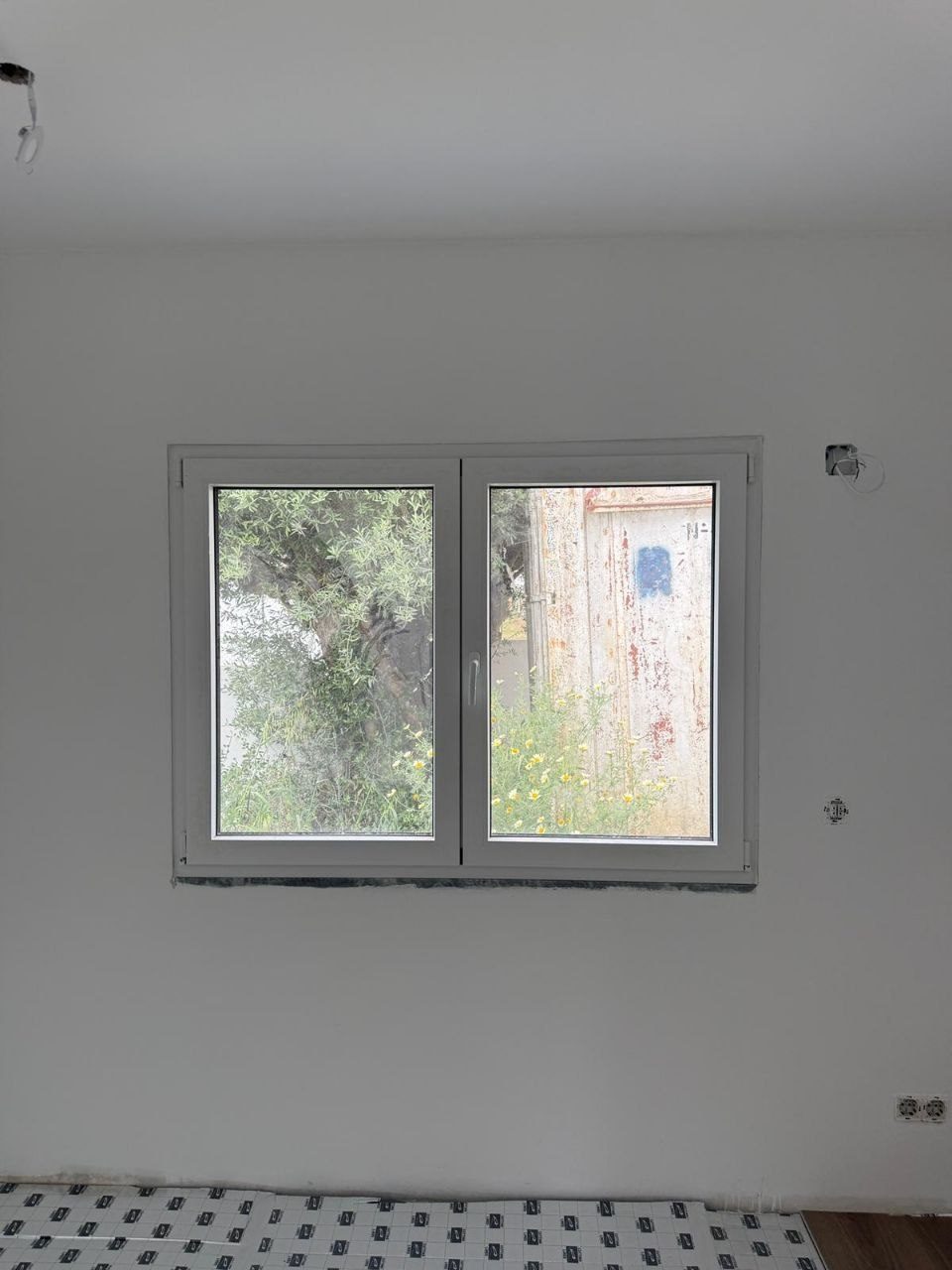
Why the house is colder than anywhere you have lived
It is not your imagination, and it is not just you. In Eurostat's 2023 figures, 20.8% of people in Portugal could not keep their home adequately warm — the highest share in the EU, tied with Spain, and double the EU average of 10.6%. A country with mild winters manages to be the coldest place in Europe to spend one.
The mechanism is simple. Because outdoor winters are short and gentle, most of the housing stock was built with no central heating, no wall insulation, and single glazing — the house was never designed to hold heat, because heating was never installed to begin with. A British or German winter happens outside the house; a Portuguese winter happens inside it. Fifteen degrees indoors, condensation on the glass by morning, and a landlord-grade electric heater fighting a losing battle.
Windows are where this is felt first and fixed first: they are the coldest surfaces in the room, the biggest air leaks, and — unlike wrapping the whole facade in insulation — a replacement measured in days, not months of scaffolding.
What you inherited with the keys
In the concelhos around Lisbon where foreign buyers concentrate, a large share of the housing stock predates 1991 — in several municipalities more than half, by the 2021 Census data we use on our local pages. A house of that generation typically comes with one of three window types:
Cold aluminium sliders — thin frames, single glass, no thermal break, installed by the million in the 70s and 80s. The metal conducts heat straight through; on a cold morning the frame itself drips. Painted timber casements — often charming, usually rotten at the sill, with gaps you can post a letter through. Or early PVC from the 90s — better, but with dead gaskets and single or early double glazing long past its sealed life.
Two things hide above and around them. The shutter box — the cavity over each window holding the roller shutter — is usually uninsulated and open to the street; our shutter box guide explains why fixing the window and skipping the box is the classic renovation mistake. And the reveals themselves may need making good once old frames come out — normal in a renovation, worth having in the budget conversation from day one.
Licences and rules: easier than you fear, with exceptions
The good news first. Under the Portuguese planning regime (RJUE, article 6.º-A), replacing exterior window frames is a “work of scant urban relevance” — exempt from any prior municipal licence — when the new windows keep an appearance identical to the original while improving energy efficiency. Like-for-like replacement that makes the house warmer is precisely what the exemption was written for.
The exceptions are the ones you would guess, plus one you might not. Classified buildings and classified ensembles — common in historic centres — fall outside the exemption entirely; there the câmara municipal decides, sometimes down to the frame material. In the protection zones around them, a 2026 amendment (Decree-Law 108/2026) keeps the exemption, but only if the new frames keep the original design and exterior finish. Visible changes to the facade — a new frame colour, a different material look, enlarging the glazed area — turn the job into a facade alteration with prior formalities. And in apartment buildings, the facade is common property: like-for-like is normally uncontested, but any visible change needs the condominium on side before it needs the câmara.
Our honest advice, and what we do in practice: describe the building to the câmara or check the PDM when there is any doubt — a renovation in Cascais's historic core and a 1980 flat in Oeiras are different worlds. We flag the risky cases at the survey; the majority of renovations we fit are plain exempt replacements.
One paperwork silver lining: you already hold an energy certificate (SCE) from the purchase. Efficient new windows improve that rating at the next certification — worth keeping the invoices and CE documentation for the assessor if you ever sell or rent.
What to actually order for this climate
Renovators arriving from colder countries tend to over-specify the frame and under-specify the glass. For the Lisbon and Setúbal climate the pragmatic order is the reverse. Double glazing with Low-E and argon covers the mild-but-unheated winter; triple glazing adds cost and weight for a marginal gain here — our Low-E guide has the numbers. On an avenue, asymmetric acoustic glass buys you more quality of life than any thermal upgrade.
On frames: PVC — uPVC, as you know it in the UK — is the value choice for standard openings, and white like-for-like keeps you inside the licence exemption. Aluminium with a thermal break earns its premium on large sliding spans. The honest comparison is in our PVC vs aluminium guide — we install both, so we have no horse in that race.
Whatever you order, demand three numbers in writing from any installer: the Uw of the complete window, the air-permeability class, and the CE documentation (EN 14351-1). Our energy ratings guide explains what they mean; a company that hesitates on any of the three is asking you to buy blind.
Running it in English, possibly from another country
The part that worries renovators most is the part that needs the least worry. A window replacement requires two moments of physical presence: the measurement survey and the installation itself. Everything in between — the itemised written quote, the contract, scheduling — travels fine by email and WhatsApp, in English.
Two habits make the remote version work. First, a written, itemised quote naming glass composition, Uw and hardware — not a phone number scribbled on a business card; our quote-comparison guide lists what a serious proposal must contain, and it applies double when you cannot drop by to ask. Second, a photo report at handover: every window, opening by opening, sent before you have to take anyone's word for it. That is how we close our own renovations for owners who fly out the day after the survey.
Renovating and pricing the windows?
Estimate in 1 minute with your measurements — no contact details. Survey and written quote in English follow when you are ready.
Sources
- Eurostat (Jan 2025): 10.6% of the EU population unable to keep their home adequately warm in 2023 — Portugal joint-highest at 20.8%
- RJUE — Decreto-Lei 555/99, artigo 6.º-A: works of scant urban relevance, exempt from prior municipal control
- CCDR Centro: guidance on obras de escassa relevância urbanística and facade alterations
Frequently asked questions
In most cases, no. Under Portuguese planning law (RJUE, article 6.º-A), replacing exterior frames counts as a “work of scant urban relevance” — exempt from prior municipal control — when the new windows keep an appearance identical to the original while improving energy efficiency. The exemption does not apply to classified buildings or classified ensembles, or when you change the look of the facade; in protection zones around classified buildings it applies only if the design and exterior finish stay identical (different colour or material at street view, larger glazed area). When in doubt, one email to the câmara municipal settles it — and we flag it at the survey if your building looks like an exception.
To stay inside the licence exemption, yes — same appearance from the outside. In practice that is rarely a sacrifice: white PVC (uPVC) replacing white-painted aluminium or timber reads the same from the street while performing in a different league. If you want a visible change — anthracite frames on a previously white facade, say — that becomes a facade alteration, which means dealing with the câmara first, and in a flat, with the condominium too.
The facade of an apartment building is common property under Portuguese condominium law, even though the windows serve your flat. Replacing like-for-like is normally uncontroversial; changing colour or frame type usually needs the condominium's blessing, and some buildings have rules written into the regulamento do condomínio. Ask the administrator before ordering — it is a five-minute question that avoids a very expensive argument.
They are usually the single biggest step, but be realistic about the rest. Houses here often have no wall insulation and a leaky shutter box over each window — replacing glass while leaving a hole above it is a classic half-measure. Our guides on the shutter box and on reading a cold house explain how to tell which problem you actually have before spending.
For most of the Lisbon and Setúbal area: double glazing with a Low-E coating and argon, which holds warmth in the mild-but-unheated winters without the cost and weight of triple glazing. Facing a busy avenue, asymmetric acoustic glass matters more than an extra pane. Our Low-E and acoustic glass guides give the numbers; the short version is that the glass specification matters more than any label on the frame.
Yes. You received an energy certificate (SCE) when you bought the property; windows are one of the elements the assessor scores. Replacing single glazing with efficient double glazing improves the rating at the next certification — which matters if you ever sell or rent the renovated house. Keep the invoice and the CE documentation: the assessor can use them.
Yes — this is normal for us, not an exception. The process needs you (or someone with keys) present twice: at the measurement survey and at installation. Everything between happens by email and WhatsApp in English: written itemised quote, contract, scheduling. After installation you get a photo report of every window, opening by opening, before you fly back.
As an order of magnitude: made-to-measure PVC (uPVC) installation runs from around €180/m², and a typical flat-sized project (5 to 7 windows) lands between €1,800 and €3,200 depending on opening types and glass. Our pricing guide breaks this down per window type, and the calculator gives you a figure for your exact measurements in a minute, no contact details required.
Mid-renovation and the windows are next?
Survey in English, written itemised quote, installation coordinated with your builder — and a photo report when it's done.