The shutter box: the hole above your window

You can have double glazing, a multi-chamber profile and a certified Uw — and still feel cold beside the opening. Above the window there is often a cavity joining street to living room, with no insulation at all.

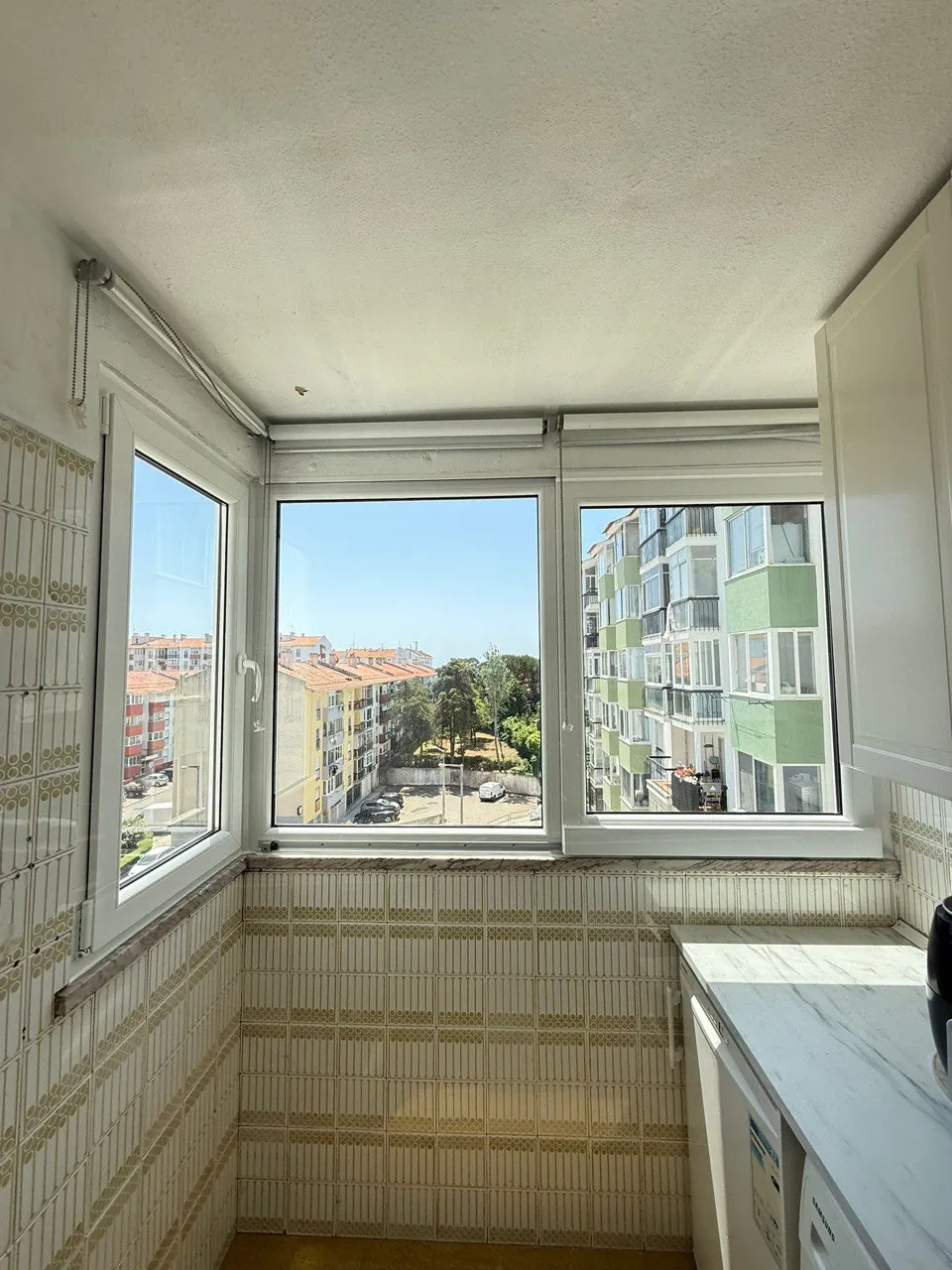
Corner PVC window in a kitchen, with the shutter box above the opening
The box sits where nobody looks: above the glass, inside the wall

Why it is the weakest point of the opening

In Portuguese thermal retrofit literature, shutter boxes are described as flat thermal bridges, subject to the same requirements as beams and columns. That is not a figure of speech: it is a part of the building envelope where the wall is interrupted and the insulation does not continue.

On top of that comes a second property that tends to surprise people: the same literature classes the box as a heavily ventilated space, which beyond insulation needs its own seals to stop air passing into the home. So the problem is twofold — insulation missing, connection to the outside in surplus.

Which is why the box appears on professional checklists. In APCMC's guidance on fitting windows on site, "check whether the shutter box is insulated" is one of the points to assess before the new window goes in, alongside levelling the opening and checking the fall on the sill.

An honest note about numbers: very precise percentages circulate for the heat loss attributed to the box. We do not use them here — the most-quoted source no longer exists, and we would rather describe the mechanism, which is verifiable, than repeat a figure we cannot confirm.

How you notice it, in the words of someone living there

None of these symptoms points at the glass. All of them point at what sits above it.

Cold that "falls" from above

You feel cold air coming down beside the window, especially at night. It is not the glass and not the sashes: it is the box, often the one point of the opening with no insulation at all between the street and your living room.

A draught with the window shut

The box connects outside to inside through the strap opening and the gaps around the lid. On a windy day it shows immediately: hold a candle near the lid and the flame leans.

Street noise the new window did not cut

This is the most frustrating complaint after a job: new glass, acoustic specification, and you can still hear the street. Sound comes in where air comes in, and the box is an open cavity right above the new glazing.

Stains or mould on the ceiling by the opening

The inner surface of the box runs colder than the wall around it. Indoor vapour condenses there first, and the mark appears in the top corner of the opening — not on the glass.

Three solutions, cheapest to most definitive

Most homes solve this on the first rung. It is worth knowing all three before asking for a quote, because the price gap between them is wide and not everyone needs the last one.

1

Line the existing box from inside

The box is sound, the lid closes, insulation is all that is missing

An insulating lining goes inside the box — moulded polystyrene or rock wool, in the Portuguese retrofit literature; today also thin multilayer panels, made to fit where the shutter still has to roll up. It is the cheapest intervention in the whole opening and it is done from inside, without touching the façade.

Limit: It will not correct a warped lid or a cracked box that lets water in.

2

Deal with the lid and the air paths

Air and noise get through, but the box is already insulated or lined

The box is, in the words of the technical literature, a heavily ventilated space: beyond insulation it needs seals that stop air passing into the home. That means the gap around the lid, the hole the strap runs through (there are brush-lined guides made for it) and the joint between box and wall.

Limit: Sealing everything without thinking about ventilation swaps one problem for another — see the note below.

3

A new box, or a monobloc with the window

The box is degraded, or you are replacing the window anyway

In deep retrofits, pre-fabricated boxes that come already insulated are fitted, or boxes made entirely of insulating material. When the window is new there is also the monobloc option: the box arrives with the window, from the factory, and sits on the outside — the cavity crossing the wall disappears altogether.

Limit: The most complete solution and the most expensive. It only pays off inside work that was happening anyway.

A caveat that applies to all three: sealing the box without thinking about air renewal in the home moves the problem rather than solving it. Building ventilation is regulated matter (Portaria 353-A/2013), and self-regulating trickle vents are often installed in the box itself.

The right moment is while the window is being replaced

Insulating a box is cheap. As an order of magnitude, the CYPE price generator for retrofit work in Portugal puts the energy retrofit of a traditional 110 cm box, with a flexible multilayer panel, at around €35 per unit — an estimating figure, with no retail margin.

What costs money is access. During the window replacement the box is already open, the shutter is already out and the team is already there: the work adds minutes. Done later, on its own, it means opening everything up again — and then the cost is no longer the material.

It is also why we raise this at the measurement rather than at the end of the job. We would rather say the box needs work before the invoice is closed, even when that adds to the quote.

Replacing your windows?

Get the window estimate; we assess the box at the measurement, with the opening in front of us.

Calculate the estimate

Frequently asked questions

In Portuguese thermal retrofit literature, shutter boxes are treated as flat thermal bridges, subject to the same requirements as beams and columns. In plain terms: it is a part of the wall where insulation simply does not exist, even in homes with good windows. That is why it appears on any serious installation checklist — APCMC lists "check whether the shutter box is insulated" among the points to assess before fitting a window.

Most likely because the job dealt with the window and left the box as it was. It is the most common situation we are called to: new double Low-E glazing, a multi-chamber profile, and above it a cavity with no insulation at all, open to the street. The <a href="/en/guides/signs-you-need-new-windows/">signs guide</a> explains how to tell what belongs to the window from what belongs to the opening.

Gluing an insulating panel inside the box is one of the most accessible interventions there is in an opening. Two things matter: do not reduce the space so much that the shutter can no longer roll up, and do not block the drainage or any ventilation paths. If the box shows signs of water, or the lid is warped, insulating over the problem only hides it.

The retrofit literature points to moulded polystyrene or rock wool applied inside the box. The Portuguese market also offers thin multilayer panels, designed for boxes with little spare room, and complete pre-fabricated boxes in high-density EPS for when the box itself is replaced. The choice depends mostly on the free space around the roll.

As an order of magnitude, the CYPE price generator for retrofit work in Portugal puts the energy retrofit of a traditional 110 cm box, using a flexible multilayer panel, at around €35 per unit at estimating level — with no retail margin. It is little money next to the rest of the opening, which is why it rarely makes sense to postpone it until after the window job.

It can, if you seal everything and give no thought to air renewal. Old boxes ventilated the home whether you asked or not, and when those gaps close, the moisture that used to escape stays. The answer is not to leave the box whistling: it is to plan controlled ventilation — self-regulating trickle vents are in fact often installed in the box itself, and building ventilation is regulated matter (Portaria 353-A/2013).

No. The calculator prices the window and the fitting; the box is assessed at the measurement, because its price depends on its condition, its length and whether there is room for insulation. We would rather say so up front than add a figure we cannot stand behind without seeing it.

It is, and it is one of the few low-cost efficiency improvements you can make without building work. But be realistic about the result: it fixes the cold coming down from the box and some of the noise; it does not turn a single-glazed window into an efficient one.

Cold coming down from the box, even with a new window?

At the measurement we look at the whole opening — window, box and finishes — and tell you what actually needs work.

✓ Whole-opening diagnosis✓ Our own team✓ No unnecessary work