Low-E glass: what it is and why it matters
The invisible technology that stops heat loss, present in practically every efficient window today.
Short answer
Low-E glass carries an invisible film of metal oxides that lets daylight and the sun’s warmth in, but reflects the heat from your heating back into the room. It is the basis of any efficient window: with argon in the cavity, it is the double glazing we fit as standard — and it does not noticeably darken the glass.
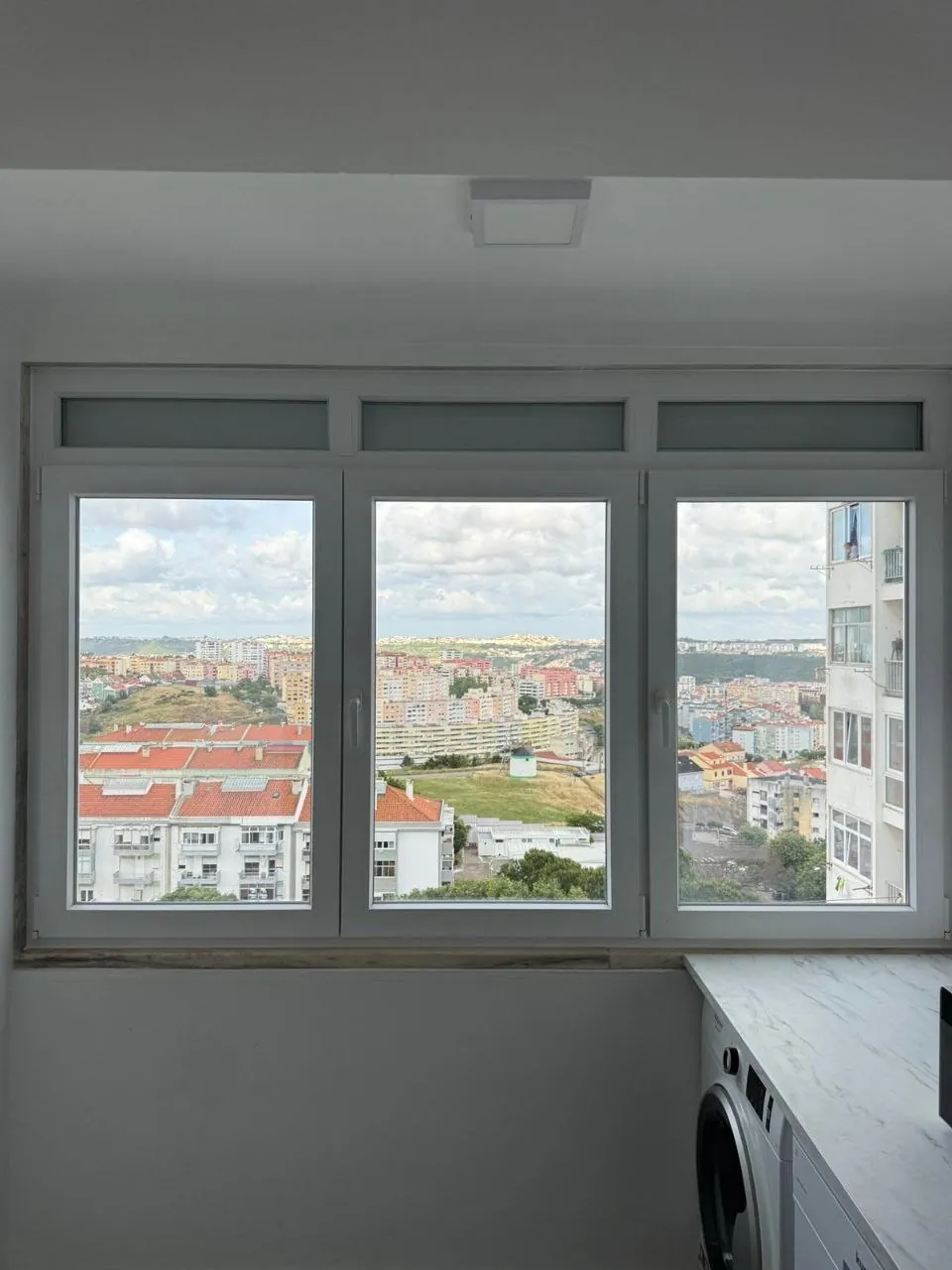
What Low-E means
Low-E means low emissivity. It's a microscopic film of metal oxides applied to one face of the glass, invisible to the naked eye, that lets sunlight and solar heat in as normal, but reflects back into the room the heat the interior has already generated (from heating, from bodies, from appliances).
In winter, the effect is: the heat already inside the room costs more to escape. In summer, combined with solar-control glass. It helps keep exterior heat outside.
Hard-coat vs soft-coat: two processes, two results
Not all Low-E is equal. The manufacturing process determines the final emissivity and where the coating can be fitted:
The lower the emissivity, the more the glass reflects infrared heat back, and the lower the resulting Ug (glass insulation). Soft-coat is the basis of most high-efficiency glass installed today in residential windows.
Which face carries the coating
In double glazing, faces are always numbered from outside in, the convention used by any manufacturer or technical datasheet:
Exterior
The face towards the street. Takes sun and rain directly.
Interior face of the outer pane
Faces the gas cavity, on the outer side. A common position for solar control.
Exterior face of the inner pane
Faces the gas cavity, on the inner side. Where soft-coat Low-E goes in most double glazing for temperate climates, protected inside the sealed cavity.
Interior
The face towards the inside of the room. Where your hand touches it.
Why this matters: a soft-coat exposed on face 1 or 4 degrades quickly from cleaning and humidity. That's why it always goes on face 2 or 3, protected inside the sealed cavity, a technical detail that separates careful manufacturing from a generic one.
Why argon adds insulation
Between the two panes of a double-glazed unit there is a gas cavity. Replacing ordinary air with argon reduces the thermal conductivity of that cavity, argon is a "lazier" gas at carrying heat than normal air. Together with Low-E. This is what stops heat loss through the window. The thermal performance of the glass alone (Ug) is calculated to EN 673, and the optical and solar properties (including the solar factor) to EN 410.
Want to know the exact Uw for your home?
We calculate the right glass for your facade and climate zone, no generic answers.
Ug, Uf and Uw: three numbers, three different things
These three abbreviations are often mixed up, but they measure different things:
- Ug: insulation of the glass alone, measured to EN 673. The number that improves most with Low-E and argon.
- Uf: insulation of the frame alone, calculated to EN ISO 10077-2. Varies widely between PVC, plain aluminium and thermally broken aluminium.
- Uw: insulation of the complete window, the average of Ug and Uf weighted by the area of each, to EN ISO 10077-1. This is the number Portuguese law regulates, and what you actually feel at home, a window with excellent glass but a weak frame won't achieve a good Uw on its own.
Practical consequence: on small windows, the frame carries proportionally more weight in the total area, so top-tier Low-E glass pays off less on a small window with a weak profile than on a large window with a good frame. The SCE (Energy Certification System for Buildings) publishes the "Efficient Windows" consumer guide, an independent reference for comparing the performance of different glass and frame solutions.
Solar factor: the other number that matters
The solar factor (g or g-value) measures the fraction of solar energy that passes through the glass and heats the room, a completely separate measurement from Uw. A pane can have an excellent Uw (insulates well against cold) and a high g-value (lets in a lot of solar heat), which is great on a cold north-facing facade but can be a problem on a south or west-facing facade with heavy sun exposure, where the risk of summer overheating rises.
Ordinance 138-I/2021 (which regulates Decree-Law 101-D/2020) sets maximum solar factor limits by summer climate zone (V1, V2 and V3), stricter in the hotter zones of Portugal. We specify the glass per facade, not as a single generic pane for the whole house, to balance winter insulation and summer solar control according to the orientation and exposure of each opening.
Low-E is not acoustic glass
It's a common mistake to lump the two together. Low-E solves the cold; asymmetric acoustic glass solves the noise, through panes of different thickness and a laminated layer. A window can have Low-E only, acoustic only, or both combined, depending on what your home needs most.
- Is cold the only problem? Standard Low-E with argon already solves it well, and is the more economical option.
- Is street noise the problem? It's worth adding asymmetric acoustic glass.
- Both? We indicate the right combination and the exact cost in your estimate.
Frequently asked questions about Low-E glass
No. They are different technologies solving different problems. Low-E deals with thermal insulation (the cold); asymmetric acoustic glass deals with noise. A single pane can carry both at once, but they are distinct layers of the solution.
Low-E on its own already improves insulation considerably. Argon adds a further gain at low cost, which is why we fit it as standard in double glazing.
Not in any noticeable way. The coating is transparent to the naked eye; the difference is in how it reflects infrared heat, not in the visible light entering the room.
There are two manufacturing processes. Hard-coat (pyrolytic) is applied at high temperature during manufacture of the float glass itself, becomes chemically bonded to the surface, is tougher and more resistant to handling, but has a higher emissivity (insulates less). Soft-coat (cathodic deposition, or "sputtered") is applied afterwards, in several ultra-thin layers, has a much lower emissivity (insulates more) but is more sensitive, which is why it is always fitted facing into the gas cavity of the double glazing, never exposed. Most high-performance Low-E glass used today in efficient windows is soft-coat.
Faces are numbered from outside in: face 1 (exterior), faces 2 and 3 (the two facing the gas cavity), face 4 (interior). Soft-coat Low-E almost always goes on face 3, protected inside the sealed cavity, on the side closest to the inside of the home, to reflect interior heat back inward in winter.
No: they are two different measurements, and confusing them is a common mistake. Uw measures heat loss by conduction (cold getting in or out). The solar factor (g or g-value, measured to EN 410) measures the fraction of solar energy that passes through the glass and heats the room. It matters mainly in summer, to avoid overheating on facades with heavy sun exposure. A good Low-E glass can have a low Uw (insulates well against cold) while also having a g-value matched to the facade's orientation, so it doesn't let in too much heat in summer.
Yes. With double glazing, Low-E and argon, our windows sit comfortably below the maximum Uw required for the winter climate zone of Lisbon and Setúbal (2.80 W/m²·°C, zone I1, under Decree-Law 101-D/2020 and Ordinance 138-I/2021). The same ordinance also sets maximum solar factor limits by summer climate zone (V1/V2/V3), stricter in the hotter zones. We match the glass to your facade's orientation and exposure within those limits.
The coating itself, protected inside the sealed cavity, barely degrades. The real risk is failure of the perimeter seal on the double-glazed unit, if the seal fails, moisture gets in and the unit fogs up between the panes (not repairable, only replaceable). It's a low risk with quality manufacturing, but not zero, hence the factory warranty on the glass unit, separate from the frame warranty.
Not necessarily. On a north-facing facade, the goal is to maximise thermal insulation (low Uw) with no real overheating concern. On a south or west-facing facade with heavy sun exposure. It can pay off to combine Low-E with solar control (a lower g-value), so the room doesn't turn into a greenhouse in summer. We specify this per facade, not as one single glass for the whole house.
It insulates more: a well-specified triple pane can push Ug even lower, but it is heavier (needs reinforced hardware and frame), more expensive, and the marginal gain over a good double Low-E is smaller in a climate like Lisbon and Setúbal than in a harsher winter climate. For most homes in our service area, double Low-E with argon already meets the required Uw comfortably; triple rarely pays for itself here.
No. Since it is protected inside the sealed cavity of the double glazing, the Low-E coating never comes into direct contact with cleaning products, you clean the outer face of the glass normally, like any window.
Windows that actually stop the cold
Double glazing with Low-E and argon as standard on all our windows. Calculate your estimate in 1 minute.