Acoustic glass: how it works and how much it insulates
The technology that keeps the avenue’s traffic outside, explained without jargon.
Short answer
Standard double glazing (4/16/4 mm) cuts about 30 dB — enough on a quiet street. With moderate traffic (60-65 dB outside), the right choice is asymmetric double glazing, with panes of different thicknesses (≈34-36 dB); on a busy avenue (70-75 dB), asymmetric acoustic laminated glass at ≈38-40 dB, above all in bedrooms facing the street.
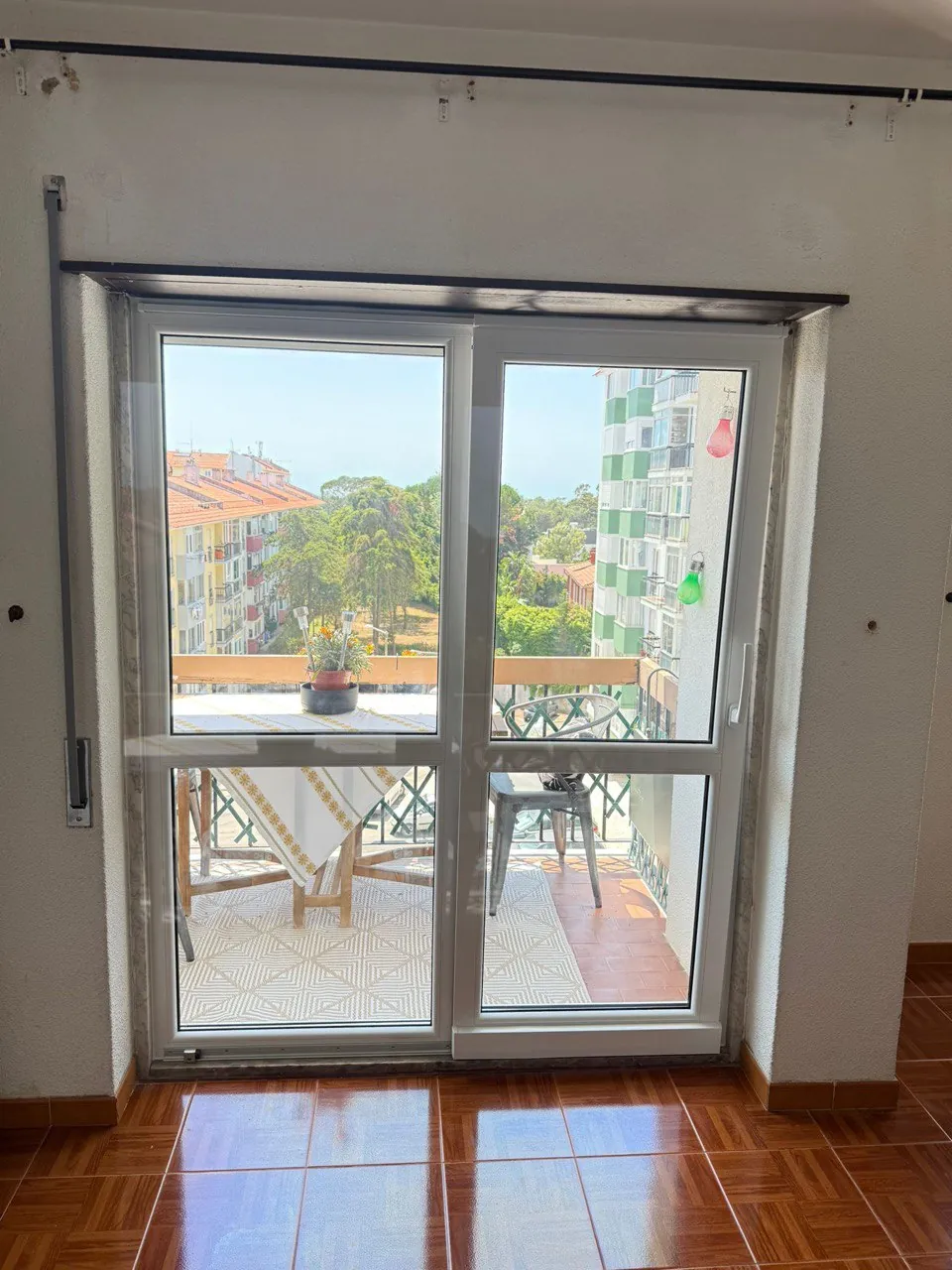
Why standard double glazing isn’t enough
Common double glazing has both panes at the same thickness. That makes them both vibrate at the same frequency when sound hits the glass, especially in a band between 2,000 and 4,000 Hz, close to human voice and traffic noise, letting through more noise than you’d expect in that range. It’s a physical effect known as acoustic coincidence.
Asymmetric acoustic glass solves this in two ways: it uses two panes of different thickness (so they don’t vibrate at the same frequency), and one of them is laminated, with a viscoelastic PVB interlayer that damps the vibration instead of transmitting it. The result is a noise reduction noticeably greater than common double glazing, especially in the frequency range where acoustic coincidence would otherwise be most damaging.
The difference in numbers (Rw, decibels)
Rw = weighted sound reduction index (EN ISO 717-1), measured for the complete glass unit, not just the acoustic laminate in isolation. The difference between an old window and a good asymmetric acoustic glass can be around 14-16 dB, and, since every 10 dB less cuts perceived noise roughly in half, the difference felt at home is large, not marginal. For urban traffic, the number that counts in practice is Rw(C;Ctr), not the standalone Rw, see the explanation in the FAQ below. Indicative values; the real gain depends on the window, the glass and the façade.
Anatomy of an asymmetric acoustic glass
On the inside, an asymmetric acoustic glass is a double-glazing unit with a deliberately unequal composition, each layer has a specific role:
- Thicker outer pane: the first barrier, stiffer, reduces the initial vibration.
- Argon-filled gap: besides insulating thermally, the width of the gap also contributes to acoustic decoupling between the two panes.
- Laminated inner pane (two thin glass sheets + PVB): the viscoelastic interlayer absorbs the vibration energy instead of letting it pass through, and is the component that contributes most to the insulation jump.
- Low-E coating: usually applied on face 3 (facing the gap), adds thermal insulation without interfering with acoustic performance.
How much noise does your street have
To gauge whether it’s worth it. It helps to know where your street sits within these typical outdoor noise levels (reference values from environmental acoustics literature, not a measurement of your address):
The World Health Organization’s Environmental Noise Guidelines (2018) recommend reducing exposure to road traffic noise to below 53 dB Lden and 45 dB during the night period. An avenue with moderate to heavy traffic already easily exceeds those values, that’s the threshold where acoustic glass stops being comfort and becomes the difference between sleeping well or not.
Not sure what level your street is at?
We indicate the realistic gain in Rw(C;Ctr) for your specific address, with no generic promises.
The glass is only half the equation
The best acoustic glass on the market loses much of its value if the frame is poorly sealed or has loose hardware, sound always finds the easiest path, and that isn’t always through the glass. If, when testing, the noise clearly increases near the window edges and drops towards the centre of the glass, the problem is the perimeter seal, not the glass specification. That’s why we always fit acoustic glass into a frame with certified original sealing, buying just the glass without taking care of the frame is money poorly spent.
Configurations and when to use each
Normal household noise, quiet street
Street with moderate traffic
Busy avenue, bedrooms facing the street
Fast road, extreme exposure
- A home on an avenue, a busy road, or near a fast road.
- Bedrooms facing the street, where noise affects sleep.
- Working from home, where calls and meetings are interrupted by outside noise.
- Areas with frequent public transport (buses, trams) right under the window.
For normal household noise, without exposure to a busy road, a standard Low-E double glazing already handles thermal comfort well. See also how Low-E glass works, the foundation of any efficient window.
Calculate my window with acoustic glass →Frequently asked questions about acoustic glass
For normal household noise. It copes fine. For intense urban noise, avenues, busy roads, proximity to a fast road. We recommend asymmetric acoustic glass, which delivers a bigger jump in insulation than a common double glazing unit.
Rw is the base index, measured in a laboratory with a generic noise source. C and Ctr are correction factors from the EN ISO 717-1 standard for real noise types: C for household and office noise, Ctr for urban traffic (engines, braking). Traffic carries more energy at low frequency, so Ctr is always more negative than C. A glass advertised as Rw(C;Ctr) = 42(-1;-5) dB in practice performs at around 37 dB against real traffic noise, not the 42 dB of the base index. For a home next to a road with traffic, the number that matters is Ctr, not the standalone Rw.
It’s a physical phenomenon: when both glass panes have the same thickness, they vibrate at the same critical frequency when hit by sound, and that shared vibration lets through more sound energy than you’d expect, creating a "hole" in the insulation over a specific frequency band, typically between 2,000 and 4,000 Hz, exactly where most of the energy of human voice and much traffic noise sits. Using two panes of different thickness eliminates this effect, because each pane then vibrates at a different frequency.
Yes, as a side effect: acoustic laminate usually includes Low-E and an argon-filled gap, so the Uw (thermal insulation) improves too. But its main job is noise, not cold, a standard Low-E glass is already enough for that.
Yes, for the façade as a whole. The Building Acoustic Requirements Regulation (RRAE, Decree-Law 96/2008) requires, for the exterior envelope elements of homes, a D2m,nT,w index ≥ 28 dB in mixed or normal-sensitivity zones, rising to ≥ 33 dB near major transport infrastructure (Article 5). This figure applies to the whole façade (wall + window), not the glass alone, but the window is almost always the weakest link in that equation.
Yes. The World Health Organization’s Environmental Noise Guidelines (2018) recommend reducing exposure to road traffic noise to below 53 dB Lden (day-evening-night weighted average) and 45 dB during the night period, due to associated negative effects on health and sleep. A busy avenue easily exceeds 65-75 dB, which is why acoustic glass is more than comfort, in many cases.
It depends on the street and the type of noise (continuous traffic, braking, voices). We indicate the expected gain in Rw(C;Ctr) for your specific address, without promising a generic figure that doesn’t apply to your case.
It’s often the frame or the seal, not the glass. Excellent acoustic glass fitted into a poorly sealed frame or one with loose hardware loses much of its benefit, the noise gets in through the gaps, bypassing the glass entirely. A simple diagnostic sign: if the noise increases noticeably near the window edges and drops towards the centre of the glass, the problem is the perimeter seal, not the glass itself.
Yes. The technology is in the glass, not the frame. It works equally in PVC windows and in thermal-break aluminium ones.
Not necessarily. Common triple glazing, with three symmetric panes, suffers from the same acoustic coincidence problem described above, triple glazing mainly gains in thermal insulation, not noise. For noise, what decides it is the asymmetry of thicknesses and the PVB laminate, which can exist in either a double or a triple unit. If you need both (extreme cold and intense noise), we combine triple glazing with one of the panes as acoustic laminate.
No. On the outside it’s normal float glass, clean it like any double glazing, with no special products. The laminate and the Low-E coating stay protected inside the sealed unit, never in direct contact with cleaning products.
Live on an avenue? Keep the noise outside
We indicate the realistic gain for your street, with no empty promises. Calculate the estimate or request a free quote.